
Making a money plan can seem hard at first. Yet, knowing budgeting basics is key for keeping your money safe. Through smart money handling, beginners can set a strong base for future wealth. This guide gives simple steps for managing your money well. It helps you take charge of your money journey.
Key Takeaways
- Budgeting empowers you to take control of your finances.
- Set achievable short-term and long-term financial goals.
- Create an emergency fund for unexpected expenses.
- Track spending to understand where your money is going.
- Use budgeting tools for better financial planning.
- Review and adjust your budget regularly.
- Efficient debt payment methods can accelerate financial stability.
Why Make a Budget
A budget is key to good money planning. It helps organize your money in and out. This way, you know your money situation and make smart choices. With a budget, you pay bills on time and save for big dreams. This helps you build good money habits.
Benefits of Budgeting
Budgeting has lots of great points. It sets clear limits on spending. This stops you from buying things you don’t need. You can save more or put money into important stuff. A budget also helps you pay bills on time. So, your money health gets better.
Financial Control and Stress Reduction
Making a budget gives you control over your money. You know where every dollar goes. This makes you feel confident and in charge of your finances. Also, a budget cuts down stress. With a plan, you worry less about money problems. It leads to a stable money life.
Identify and Set Financial Goals
Having clear financial goals is key to a secure and planned future. It matters whether you’re thinking short-term or dreaming big for the future. Setting goals is the first step to managing your money right.
Short-term Goals
Short-term goals can be met within a year. They include making a monthly budget, paying off debt with high interest, or starting an emergency fund. These goals quickly address your immediate money needs and lay the groundwork for bigger plans. They also tie into setting financial objectives.
Long-term Goals
Long-term goals take more time and are vital for your financial future. These might be saving for retirement, buying a house, or building wealth that lasts generations. Setting long-term milestones helps you grow and stabilize your finances over time. Clear goals are crucial to reach these big dreams.
| Time Frame | Examples of Financial Goals |
|---|---|
| Short-term (up to 1 year) | Creating a budget, paying off high-interest debt, building an emergency fund |
| Mid-term (3-5 years) | Paying off student loans, saving for a down payment, investing in education |
| Long-term (> 5 years) | Retirement planning, paying off a mortgage, creating generational wealth |
It’s important to keep checking and updating your goals as life changes. This keeps your financial plans in line with your current situation. Helps you stay on track towards both your immediate and future goals. For tips on how to do this, check out Investopedia’s guide on setting financial goals.
Create an Emergency Fund
Having an emergency fund is key to financial steadiness. It is like a safety net for surprise costs. It ensures you have money for many months if needed.
Purpose of an Emergency Fund
An emergency fund protects you when unexpected things happen. Things like health issues, car fixes, or losing a job. It helps you stay calm, cuts money worries, and keeps you from needing costly loans.
This fund is vital for keeping your finances safe. It’s there for you when things go wrong.
Steps to Build an Emergency Fund
Starting an emergency fund can feel tough, but it’s easier with a plan.
- Start Small: Even $5 a week begins to add up to a big help later on.
- Save $5 a week, and you have $260 after a year.
- Save $10 a week for $520 after a year.
- With $15 a week, it’s $780 after a year.
- Saving $20 weekly gets you $1,040 in a year.
- Pack lunch instead of buying.
- Brew your coffee at home.
- Try public transport.
- Skip one thing you don’t need at the store.
- Look for discounts and cashback.
- Put tax returns, bonuses, or pay raises into your fund.
- Sell things you don’t use for extra money.
- When you finish paying a loan, keep saving that amount.
An emergency fund is vital for a stable money future. Begin with small steps, save automatically, spend wisely, and use extra cash wisely to build a solid financial cushion.
Know Where Your Money is Going
Knowing where your money goes is key to handling your cash well. Tracking your spending helps you see what you buy. This makes you more aware of your money habits.
You might keep a detailed journal or use apps like Mint or YNAB to track your spending. These help by making tracking easy and show where your money goes. Let’s look at how tracking expenses makes you more money-wise:
- Identify Unnecessary Spending: Watching your expenses lets you cut what you don’t need.
- Allocate Funds Effectively: Knowing where money goes helps match spending with goals.
- Prevent Overspending: Seeing all spending helps stick to budgets and stops impulse buys.
Adding expense tracking to your money habits can lead to better choices and big savings. Understanding your money flow is the first step to being stable financially.
Evaluate Your Needs and Wants
Understanding the difference between needs and wants is key. It helps you make smart money choices. By knowing what’s essential and what’s not, you can keep your budget in line with your goals.
Understanding Needs
Needs are things you must have to live and function every day. This category includes items such as food, a place to live, utilities, getting around, and health care. It’s important to cover these needs first before spending money elsewhere. This is essential for wise budgeting.
Recognizing Wants
Wants, on the other hand, are not necessary for survival. They include things like eating out, fun activities, trips, and fancy items. Knowing what’s a want and what’s a need can help you spend smarter. It leads to better control over your finances.
Using this knowledge in your budget helps you avoid unnecessary spending. It allows you to focus on what’s truly important. This way, you can manage your money better and make smarter choices.
Steps to Create a Budget
Making a budget is key for good money management. Starting a planned budget helps people control their money and reach their money goals. Here are easy steps to make a budget that fits you.
List Your Income, Savings, and Expenses
First, write down all money sources, savings, and what you spend each month. This is very important because it shows your monthly money flow. Make sure to note earnings from jobs, freelance work, dividends, and any other incomes.
It’s also key to track how much you save and all you spend your money on. This includes rent, power, food, getting around, and fun activities.
- Income: Salary, bonuses, freelance income, etc.
- Savings: Retirement accounts, emergency fund, investments
- Expenses: Rent/mortgage, utilities, groceries, transportation, entertainment, etc.
Review and Adjust Your Budget
It’s important to check and change your budget to match your financial changes or goals. Doing this keeps your budget real and helpful as time goes on. Think of it as an ongoing task where you can tweak your plan to match what you really earn and spend.
Adjusting your budget might mean spending less on extra things or moving money to more important areas. Be ready to change how you manage your budget to get the best results for your money.
Budgeting Techniques for Beginners
Finding the best budgeting methods is key for keeping your money in check, especially for starters. We will look into two main ways to help you begin wisely.
Zero-Based Budgeting
Zero-based budgeting makes sure every dollar has a job. It helps you track your money better, giving you more control. This plan helps you spend and save wisely. It makes it easy to see where to save or spend more.
50/30/20 Rule
The 50/30/20 rule is a simple method to handle money. It splits your income: 50% for needs, 30% for wants, 20% for savings. This way, you can save well and still enjoy your money.
| Budgeting Strategy | Description | Best For |
|---|---|---|
| Zero-Based Budgeting | Allocates every dollar to a specific purpose | Detailed spenders |
| 50/30/20 Rule | Divides income into needs, wants, and savings | Simplistic planners |
By learning and using these budgeting ways, starters can really get to know their spending. This creates a lasting plan for their money future.
Use Budgeting Tools
Using budget tools can make handling your money easier. Many people like digital budgeting apps and software. They let you watch your spending, make budgets, and plan for the future.
There are lots of budget tools out there. Each one has its own special features. Using these tools can help you understand how you spend your money. You can then make smarter choices. Here are some of the best ones:
| Tool | Key Features |
|---|---|
| Mint | Automatic categorization of expenses, custom budgets, financial goal tracking |
| You Need a Budget (YNAB) | Zero-based budgeting, detailed reporting, debt payoff planner |
| Personal Capital | Investment tracking, retirement planning, advisory services |
Apps like Mint help you see where your money goes. They sort your spending automatically. Tools like Personal Capital are great for tracking investments and retirement planning.
YNAB teaches you to give every dollar a job. This makes sure you use your money well. Adding these tools to your money routine can make a big difference. They simplify complex budgeting. Choosing the right tool can make your financial life better and less stressful.
Tips to Stick to Your Budget
Sticking to a budget can be tough. But, with regular checks and updates, you can get better at managing your money. Here are some tips to help you stay on track with your budget.
Track Your Spending
Tracking where your money goes is key. Keeping a close eye on your spending is crucial. Use apps or a spreadsheet to note what you spend each day. This helps you see where to save money.
Regularly Reevaluate Your Budget
Your money situation can change. So, it’s important to check your budget often. At the end of each month, look at what you spent. See if you need to make changes. This keeps your budget up-to-date. It also helps you stay financially strong.
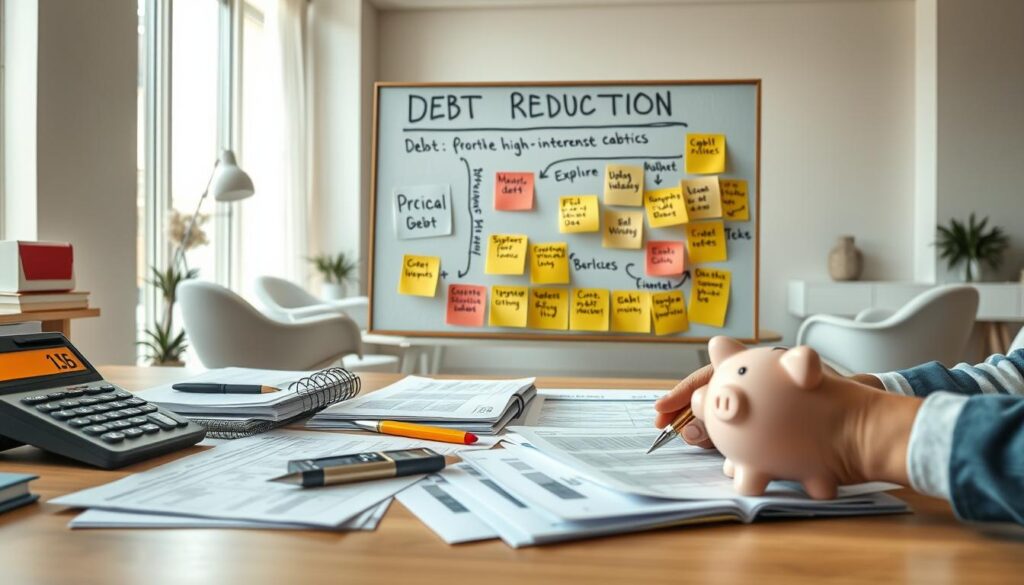
Pay Down Debt Efficiently
Being smart about paying off debt matters a lot. You can pick from the snowball or avalanche method. They help you get rid of debt faster and save on interest. This way, you find financial peace.
Debt Snowball Method
The snowball method means you pay small debts first, then tackle bigger ones. It feels great to clear debts one by one. Say you have debts of $500, $1,000, and $2,000. Start with the $500 one.
Debt Avalanche Method
The avalanche method is different. You pay off high-interest debts first. This saves you money in the long run. Imagine having loans at 20%, 15%, and 10% interest. You would pay the 20% one first.
| Method | Focus | Benefits | Drawbacks |
|---|---|---|---|
| Debt Snowball | Smallest Debt First | Quick Wins, Motivational | May Pay More Interest |
| Debt Avalanche | Highest Interest First | Less Interest Paid | Takes Longer for Wins |
Using these strategies lets you choose how to pay off debt. You might like the snowball method for the motivation. Or prefer the avalanche for saving on interest. The key is to keep making payments steadily.
Common Budgeting Mistakes to Avoid
Even small mistakes in budgeting can lead to big money problems. It’s important to stay away from common budgeting errors. One big error is not guessing your expenses right, which can mess up your budget. Make sure to plan for all costs, even the ones you don’t expect, to avoid surprises.
It’s easy to forget to update your budget when things in life change. Your budget needs to change too if your money situation or expenses do. Changing your budget helps you avoid financial planning mistakes. Also, setting goals that are too difficult can make you upset. It’s better to set goals that you can really achieve.
| Budgeting Error | Impact | Solution |
|---|---|---|
| Underestimating Expenses | Budget Overruns | Accurately track all spending, including irregular costs |
| Not Adjusting Budget | Inability to manage changes | Review and update budget regularly |
| Unrealistic Goals | Lack of motivation | Set achievable and measurable financial goals |
Knowing and fixing these common budgeting pitfalls can make your budget better. Stay aware and make changes to lower your financial planning mistakes. This makes your future safer and more stable with money.
Conclusion
We’ve gone through a lot in budgeting. It’s a key skill for keeping your money in check. First, we talked about making a budget, setting money goals, and having some savings for emergencies. These steps help you manage your money well.
We learned it’s important to know where your money goes. Knowing what you really need versus what you want helps a lot. We also looked at easy budget methods like Zero-Based Budgeting and the 50/30/20 Rule. These can really help you take control of your cash.
Using budget tools and keeping track of spending are big steps to win at budgeting. Paying off what you owe is also important. Avoiding mistakes and checking your budget often keeps you on track. Learning more about money will help you keep growing and stay secure. Remember, budgeting is a journey, not just a one-time thing. It’s about being smart with your money always.
FAQ
Why is budgeting important?
Budgeting is key for handling money well. It ensures you can pay for what you need and save. By setting spending limits, you avoid financial stress. This gives you better control over your money.
What benefits does budgeting offer?
Budgeting has many pluses. It helps you spend wisely and save more. You won’t spend more than you have. It cuts down on money worries. You’ll feel more in charge of your finances.
How can budgeting help in reducing financial stress?
Budgeting lets you see your money situation clearly. This stops surprise money problems. It’s a big help in feeling less stressed about cash.
What are short-term financial goals?
Short-term goals are things you plan to do soon. Like paying off a credit card. Or saving for a trip.
Why are long-term financial goals important?
Saving for the future, like retirement, is key. It makes sure you’re secure later. Your budget today helps reach those goals.
What is the purpose of an emergency fund?
An emergency fund is money saved for unexpected times. It gives you peace of mind. It keeps you stable when surprises happen.
How can I build an emergency fund?
Start with saving a little often. Cut back on things you don’t need. Put any extra money, like bonuses, into your fund. Aim to cover many months of expenses.
How do I track where my money is going?
Use a spreadsheet, notebook, or apps to watch your spending. This helps find where you can spend less.
How can I differentiate between needs and wants?
Needs are must-haves, like food and a home. Wants are nice-to-haves, like dining out. Knowing the difference helps you budget better.
What are the steps to create a budget?
Write down all income and what you spend. Put things in categories. Save some money. Check and change your budget as time goes by to stay on track.
What is zero-based budgeting?
In zero-based budgeting, every dollar has a job. Expenses, savings, or paying off debt. Your income minus expenses should be zero.
What is the 50/30/20 rule?
This rule breaks down your income. Spend 50% on needs, 30% on wants, and save or pay off debt with 20%.
How can budgeting tools help in financial planning?
Tools like apps make budgeting easier. They show how you spend your money. They keep you organized to reach your money goals.
What are some tips to stick to a budget?
Keep an eye on spending. Update your budget as needed. Stay focused on your financial targets to keep your budget working.
What is the debt snowball method?
Start by clearing small debts first. Then tackle bigger ones. It builds momentum in paying off debt.
What is the debt avalanche method?
Pay off high-interest debts first. It saves on interest. This lowers your total debt quicker.
What are some common budgeting mistakes to avoid?
Don’t guess low on what you spend. Update your budget when things change. Always track your spending. These steps keep you financially steady.